
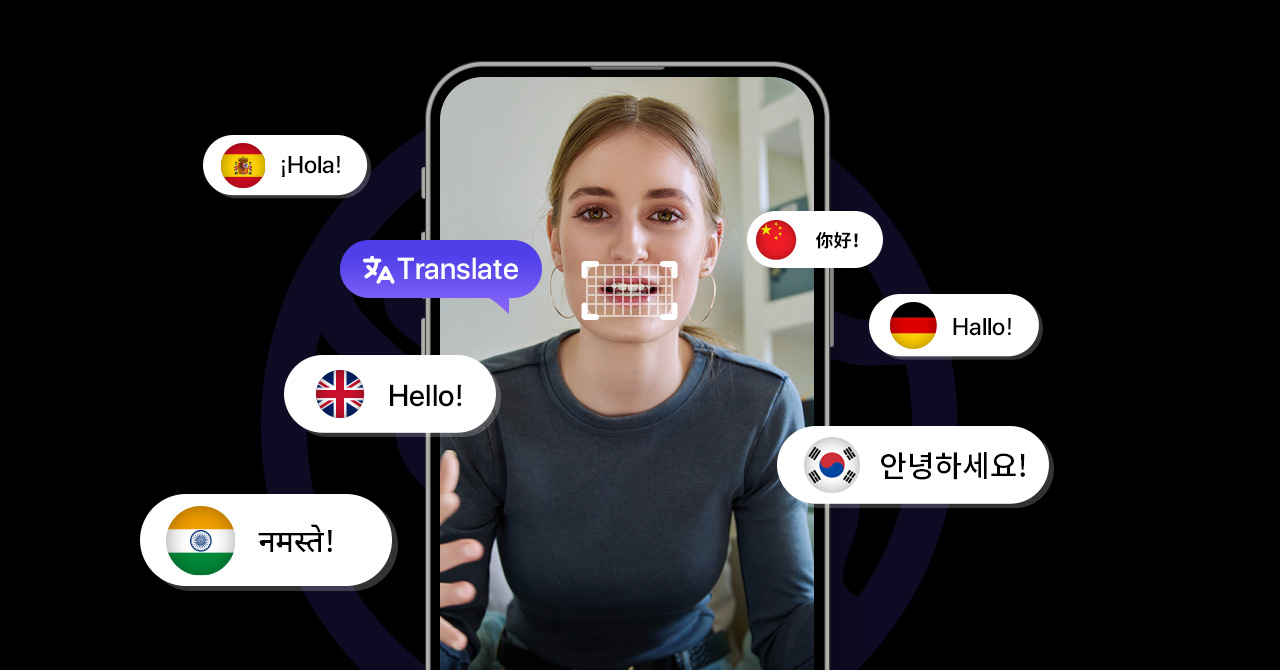
We've all seen those old dubbed movies. The actor's mouth stops moving, but the voice keeps talking for another two seconds. Or worse, the mouth is moving frantically while the audio is completely silent.
It's funny in a 1970s Kung Fu movie. But in a corporate presentation, an online course, or a YouTube video, it's a disaster.
Bad dubbing breaks immersion. It screams "fake." And most importantly, it kills your audience retention.
Enter AI Lip-Sync (Lip Synchronization)—the game-changing technology that Genve.ai uses to make translated videos look 100% native.
But how does it work, and is it really necessary for your content? Let's dive in.
What Exactly is AI Lip-Sync?
In the past, "Video Translation" just meant replacing the audio track. The video visuals remained exactly the same.
AI Video Lip-Sync takes it a step further. It is a generative AI process that visually modifies the pixels around the speaker's mouth to match the new spoken language.
For example:
- Original (English): You say "Hello" (Mouth opens wide).
- Translation (Spanish): You say "Hola" (Mouth forms an 'O' shape).
Without Lip-Sync, the Spanish audio says "Hola", but your lips still look like they are saying "Hello".
With Genve.ai's Lip-Sync, the software actually redraws the mouth movements frame-by-frame so the lips physically form the word "Hola".
The result? The viewer's brain is tricked into believing the speaker is actually fluent in Spanish.
Why "The Lips" Matter More Than You Think
You might ask: "Is this just a fancy gimmick? Do viewers really care?"
The answer lies in psychology.
1. Avoiding the "Uncanny Valley"
When our eyes see one thing and our ears hear another, it creates a cognitive dissonance known as the McGurk Effect. The brain gets confused and distracted. Instead of focusing on your message, the viewer focuses on the weird mouth movements.
AI Lip-Sync solves this, keeping the viewer comfortable and focused.
2. Skyrocketing Retention Rates
Social media is brutal. If a video feels "off" or "low quality" within the first 3 seconds, users scroll away.
A video with perfect lip-sync feels like premium, native content. It tells the viewer: "This video was made for YOU, in your language."
3. Building Trust and Authority
Imagine a CEO giving a serious update, or a professor teaching a complex topic. If they look like a badly dubbed movie character, they lose authority.
For Educators and Business Leaders, Lip-Sync is not a luxury—it's a necessity for maintaining credibility across borders.
How Genve.ai Makes Lip-Sync Easy
Until recently, fixing lip-sync required Hollywood-level VFX teams and budget. Now, Genve.ai automates the entire process.
Here is the difference between a standard translator and Genve:
- Standard Tool: Translate Text → Generate Audio → Paste over Video. (Result: Mismatched lips).
- Genve.ai Process: Translate Text → Generate Audio (Voice Cloning) → Analyze Phonemes → Regenerate Video Frames → Render Final Video.
Genve's algorithm is smart enough to only modify the lower face area, keeping the rest of the facial expressions, eye contact, and head movements completely natural.
Who Needs AI Lip-Sync the Most?
While every translated video benefits from it, these three categories see the highest ROI:
-
On-Camera Courses (E-Learning): Students need to watch the instructor's face to stay engaged. Lip-sync is crucial here.
-
Marketing & Ad Creatives: High-converting ads need to build trust instantly.
-
Personal Branding (YouTubers/Influencers): Your face is your brand. Don't let a bad dub ruin your connection with international fans.
How to Enable Lip-Sync on Genve.ai
We designed Genve to be "one-click" simple.
- Upload your video (ensure the face is clearly visible).
- Select your target languages.
- Check the "Lip-Sync" box in the settings panel.
- Export.
That's it. The AI handles the complex geometry and texture mapping in the cloud.
Conclusion
The standard for global content has risen. Subtitles are helpful, but they split attention. Dubbing is better, but bad dubbing is distracting.
AI Lip-Sync is the future of video localization. It allows you to speak 29+ languages fluently, without ever learning a word.
Don't let language barriers—or mismatched lips—hold your content back.