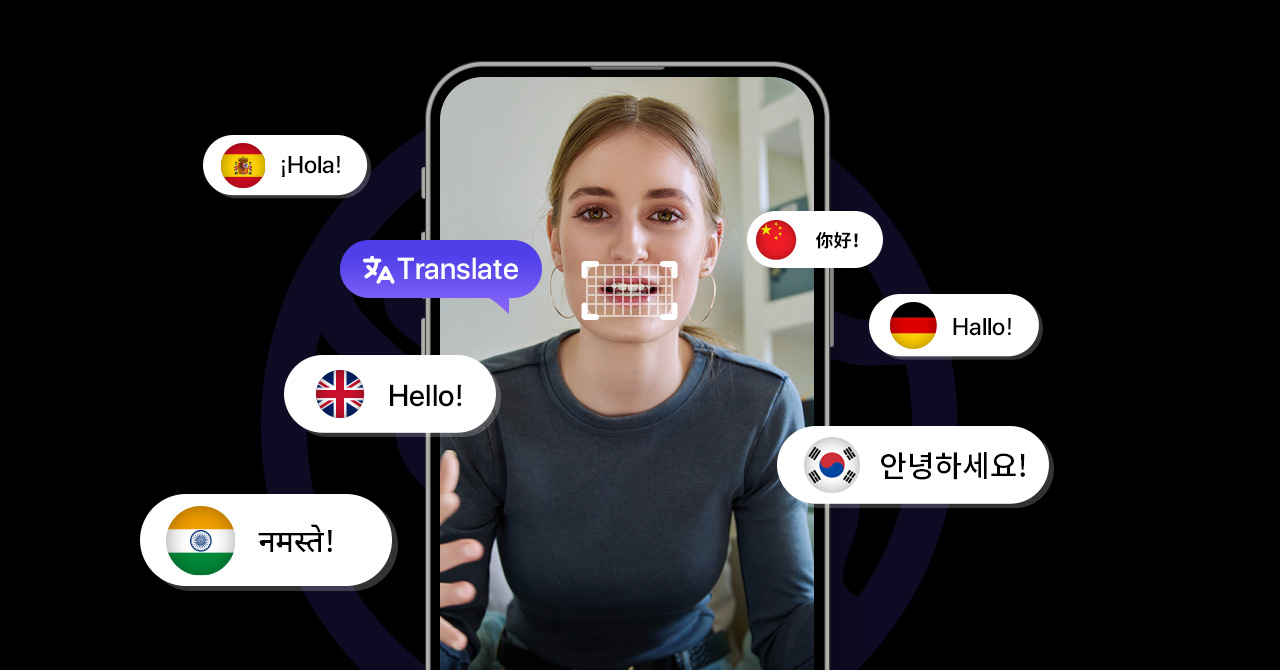

Modern AI lip-sync technology is a marvel of computer vision and generative AI. Let's explore how it actually works.
The Challenge
Different languages use different mouth shapes (phonemes) for their sounds. "Hello" in English creates different lip movements than "Hola" in Spanish.
How AI Solves It
1. Face Detection & Tracking
The AI first identifies and tracks the face throughout the video, creating a detailed map of facial landmarks.
2. Phoneme Analysis
The new translated audio is analyzed to identify each phoneme (distinct sound unit). Each phoneme corresponds to specific mouth shapes.
3. Frame Generation
Using generative AI models similar to those powering image generators, the system creates new mouth positions for each video frame.
4. Seamless Blending
The modified mouth area is blended back into the original video, preserving the rest of the face, lighting, and video quality.
The Technology Stack
Modern lip-sync systems use:
- Wav2Lip or similar models for audio-to-lip mapping
- GANs (Generative Adversarial Networks) for realistic frame generation
- Super-resolution models to maintain video quality
Why Genve.ai Stands Out
Our proprietary models are trained specifically for video localization, optimizing for:
- Natural lip movements
- Emotion preservation
- Processing speed
- Video quality retention